What are diisocyanates ?

[dsm_block_reveal_text block_reveal_text=”What are diisocyanates?” admin_label=”About us” _builder_version=”4.17.4″ _module_preset=”default” global_colors_info=”{}”][/dsm_block_reveal_text]

Polyurethanes, like all plastics, are polymers. They are made by reacting diisocyanates (MDI and/or TDI) with a range of polyols, to create a substance that is safe and versatile.

Depending on the end product, the chemical formulations may contain other ingredients such as catalysts, blowing agents and possibly flame retardants. These various combinations allow the manufacture of a range of product types:


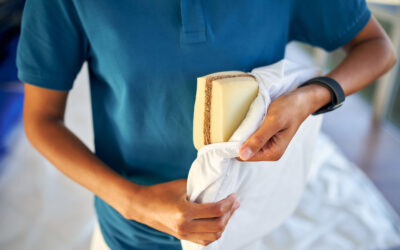
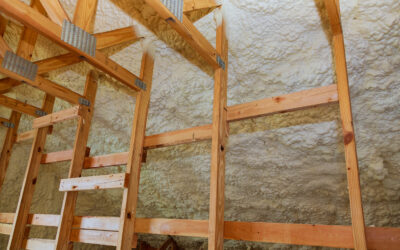
  • Rigid and flexible foams
  • Rigid and flexible integral skin foams
  • Elastomers
  • Adhesives
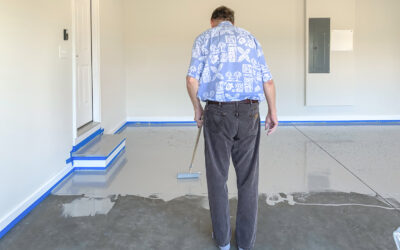
  • Coatings
  • Sealants
[dsm_block_reveal_text block_reveal_text=”Video” admin_label=”About us” _builder_version=”4.17.4″ _module_preset=”default” global_colors_info=”{}”][/dsm_block_reveal_text]
[dsm_image_carousel gallery_ids=”1670,1671,1672,1673,1674,1679,1958,1959,1960,1961″ gallery_orderby=”rand” sizes=”et-pb-post-main-image” slide_to_show=”5″ speed=”5000″ autoplay_speed=”100″ space_between=”-3″ infinite_smooth_scrolling=”on” horizontal_alignment=”flex-start” arrow_position=”inside” _builder_version=”4.17.6″ _module_preset=”default” custom_margin=”0px||0px||false|false” custom_padding=”0px||0px||false|false” global_colors_info=”{}”][/dsm_image_carousel][dsm_image_carousel gallery_ids=”1680,1681,1682,1778,1779,1780,1781,1782,1783,1965,1964,1963,1957,1956″ gallery_orderby=”rand” sizes=”et-pb-post-main-image” slider_direction=”rtl” slide_to_show=”5″ speed=”5000″ autoplay_speed=”100″ space_between=”-3″ infinite_smooth_scrolling=”on” horizontal_alignment=”flex-start” arrow_position=”inside” _builder_version=”4.17.6″ _module_preset=”default” custom_margin=”0px||0px||false|false” custom_padding=”0px||0px||false|false” global_colors_info=”{}”][/dsm_image_carousel]

The density of the product is controlled by the amount of blowing agent and the flexibility or rigidity is controlled by the type of polyols and diisocyanates that are used.

The different forms of polyurethane are often combined with other materials to manufacture, for example:

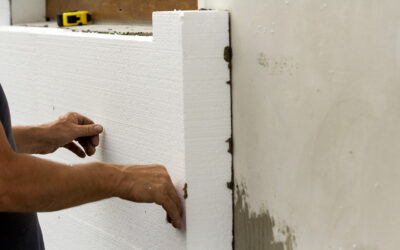
  • Insulated building panels
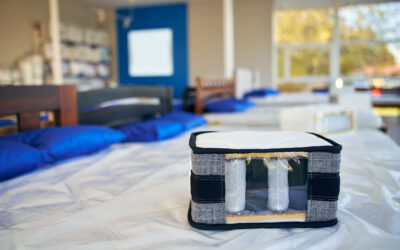
  • Mattresses and upholstered furniture
  • Car seats
  • Domestic refrigerators and freezers
  • Composite wood panels
  • Truck bodies
  • Footwear

Worldwide more than 30 million tonnes of polyurethane are produced every year . You can find out more about Applications  and Socio-economic data on this website.